


World Day of Migrants and Refugees
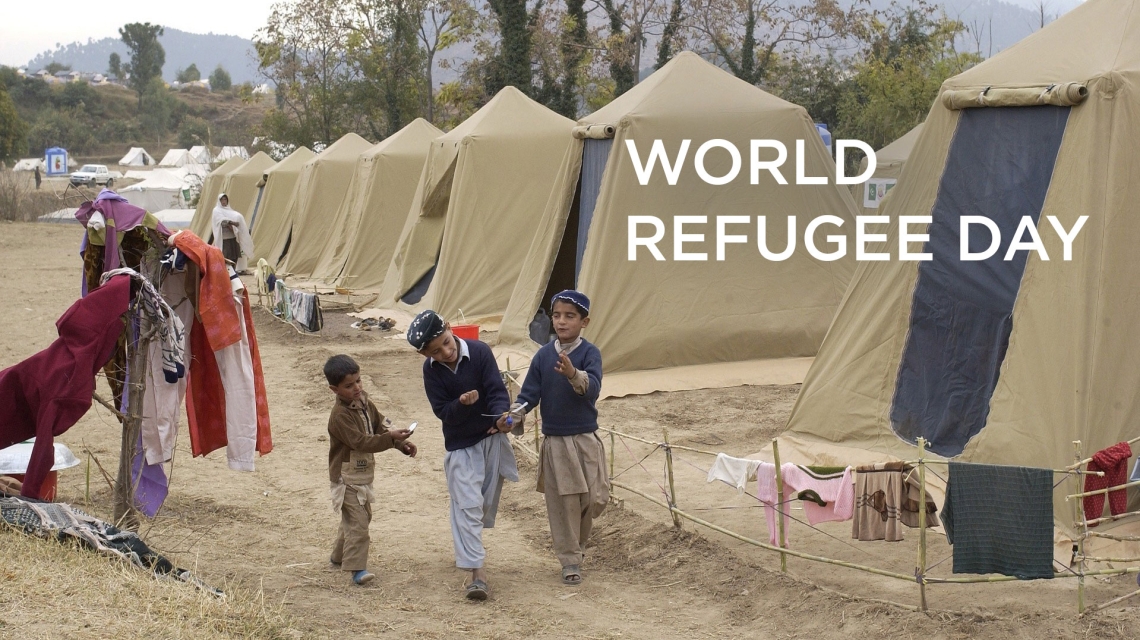
To raise wareness for the plight of refugees around the world and to celebrate the strength and courage of people who have been forced to flee their home countries, the Catholic Church celebrates World Day of Migrants and Refugees on the last Sunday in September. In 2026, it will be observed on September 27. Pope Leo XIV has chosen the theme of "Even just one of these children, a reference to Mathew 18:5: "Whoever welcomes one such child in my name welcomes me."
In announcing the theme, the DIcastery for Promoting Human Development stated, "With this choice, the Holy Father intends to express the Church’s concern for minors directly involved in migration, recalling the duty to welcome each one of them as the Gospel teaches us."
The dicastery continued: "Current migration situation presents new challenges that seriously threaten the rights and dignity of the youngest among us and require urgent and effective responses."
The origins of the day date to Pope Pius X in 1914. In response to the millions of Italians who had immigrated abroad in the years before WWI, the pope called on Christians to pray for the migrants.
In 2004, the Pontifical Council for the Pastoral Care of Migrants and Itinerant People added refugees to the celebration, and in 2018, Pope Francis moved the celebration from January, when it had been celebrated, to the last Sunday in September.
Welcoming the Stranger
Welcoming the stranger is one of the corporal works of mercy. To welcome the stranger means to accept those who come from other places into our communities, our parishes, and our homes even as we would welcome Christ. To welcome means to treat those who arrive among us with the dignity we owe to each human person, rather than greet them with suspicion; to invite them to integrate into the community and to become participants in its life, and not just observers. In that regard, we are reminded that welcoming immigrants is the tradition of our great nation built with people of many countries seeking to make a life and home here.
"At the heart of the Gospel of mercy, the encounter and acceptance by others are intertwined with the encounter and acceptance of God himself. Welcoming others means welcoming God in person! Do not let yourselves be robbed of the hope and joy of life born of your experience of God’s mercy, as manifested in the people you meet on your journey!" said Pope Francis at the Vatican on September 12, 2015.
Catholic Charities Refugee and Immigration Services
Guided by Catholic social teaching to work for justice and care for the oppressed, Catholic Charities stands with refugees who are unable to remain in their home country due to well-founded fear of persecution or for reasons of race, religion, nationality, membership in a particular group, or political opinion and are granted legal status by the U.S. government. We recognize their perseverance and appreciate the many cultural contributions immigrants bring to Maine. [Read more about the work of RIS.]
What is the difference between a refugee and an asylum seeker?
A refugee is any person who is outside their country of origin and unable or unwilling to return there or to avail themselves of its protection on account of a well-founded fear of persecution for reasons of race, religion, nationality, membership in a particular group, or political opinion, as defined by the United Nations High Commissioner for Refugees (UNHCR).
An asylum seeker is anyone who has fled persecution in their home country and is seeking a safe haven in a new country but has not yet been granted asylum (sanctuary). Asylum seekers wishing to remain in the United States must file applications within a year of arrival. Under current federal law, an asylum seeker can receive permission to work in the U.S. 150 days after an asylum application is submitted.
An asylee is an individual who has sought and received protection from fear of persecution by submitting an asylum application to the U.S. Citizen and Immigration Services (USCIS) and asking to be granted political asylum to reside in the United States. Asylees enter the United States on student or work visas or as undocumented individuals and then petition for asylum and are granted legal status by the U.S. government.
Resources
Catholic Charities Maine Office of Refugee Services
Pope Francis' Message for the 110th World Day of Migrants and Refugees 2024 (External Link)
Pope Francis Message for the World Day of Migrants and Refugees 2023 (External link)